
In industrial production, heat exchangers are core equipment for achieving heat transfer and management. Facing a wide variety of products on the market, shell-and-tube heat exchangers and air-cooled heat exchangers are the two most common and widely applied technical solutions. This article will help you comprehensively understand these two types of heat exchangers from multiple dimensions, including working principles, structural features, application scenarios, and selection considerations, and provide reliable reference for actual engineering selection.
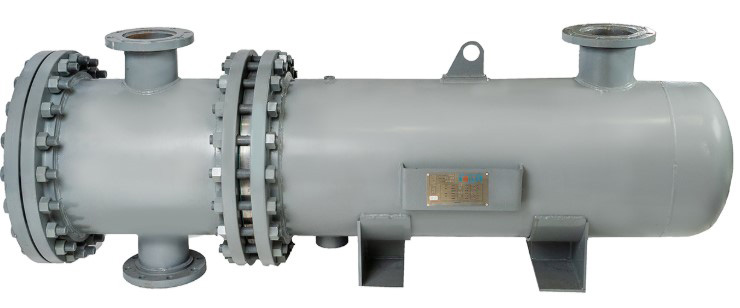
The basic structure of a shell-and-tube heat exchanger consists of multiple tubes installed inside a cylindrical shell. During operation, one fluid flows inside the tubes while another fluid flows through the shell side (the space between the tubes and the shell). Heat is transferred through the tube walls from the high-temperature fluid to the low-temperature fluid, achieving heat exchange.
Key components of this design include baffles, tube sheets, and channels. The function of baffles is to guide the flow direction of the shell-side fluid and prevent the fluid from “shortcutting” directly through the tube bundle, thereby extending the residence time in the shell and improving heat transfer efficiency. Tube sheets are used to fix the tubes and separate the tube-side and shell-side fluids. Depending on process requirements, tubes can be designed as straight tubes or U-tubes. The U-tube design allows for thermal expansion of the tube bundle, suitable for conditions with large temperature differences.
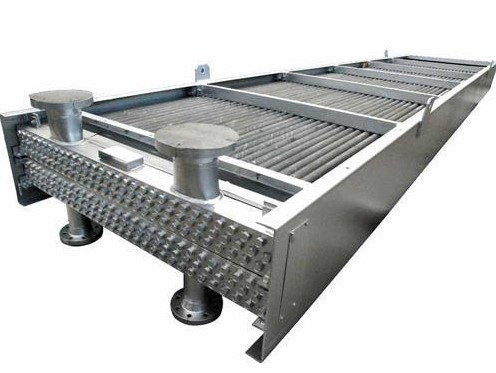
Air-cooled heat exchangers (ACHE) use a completely different cooling method. They utilize ambient air as the cooling medium and remove heat from process fluids through finned tubes and a fan system.
The specific working process is as follows: hot fluid enters the finned tube bundle, heat transfers through the tube wall to the fins, and then the fins transfer heat to the air. Large fans (either forced-draft or induced-draft) push or pull air over the fin surfaces, carrying heat away, and the heated air is subsequently discharged from the system. The cooled fluid can return to the process cycle or undergo subsequent treatment.
Fin design is critical to air-cooled heat exchangers. Fins significantly increase the heat transfer area, compensating for the low heat transfer coefficient of air. Common fin types include L-shaped fin tubes, embedded fin tubes, and extruded fin tubes, suitable for different temperature and pressure conditions.
Shell-and-tube heat exchangers are highly flexible in structural design. They can be installed vertically or horizontally to adapt to different site conditions. Vertical installation requires less floor space, suitable for confined areas, while horizontal installation facilitates maintenance and inspection.
From a manufacturing perspective, shell-and-tube heat exchangers must comply with strict ASME pressure vessel standards. Welding quality is a key control point, especially at the connection between tube sheets and tubes, which must ensure high strength and sealing performance. The alignment accuracy of baffles and the overall structural integrity directly affect performance under high-pressure conditions.
Material selection is broad, including carbon steel, stainless steel, and various special alloys. For corrosive media, titanium or duplex steel can be chosen; for high-temperature and high-pressure conditions, thickened shells and reinforced tube sheet designs are required.
Air-cooled heat exchangers are typically arranged horizontally to maximize air circulation and heat dissipation efficiency. Although this layout requires more installation space, it ensures uniform airflow over the tube bundle and improves heat transfer.
Core components include the tube bundle, fins, fans, support structures, headers, and control systems. The tube bundle consists of finned tubes and can be customized in size and arrangement according to process requirements. The fan system is motor-driven and must be precisely designed to control vibration and maintain stable airflow distribution.
During manufacturing, finned tube bundles require careful handling because thin metal fins are easily damaged. The header design must allow easy tube-side maintenance, and support structures must be robust enough to withstand wind load and operational vibration.
Material-wise, air-cooled heat exchangers usually use carbon steel tubes with aluminum fins. Aluminum fins are lightweight, thermally conductive, and cost-effective, making them the preferred choice for most applications. For corrosive environments, stainless steel or special coatings can be applied for protection.
The most prominent advantage of shell-and-tube heat exchangers is their ability to withstand extreme operating conditions. Their enclosed structure and sturdy shell design make them the preferred solution for high-temperature and high-pressure conditions, including handling superheated fluids and high-pressure steam.
In terms of heat transfer efficiency, shell-and-tube heat exchangers perform excellently in liquid–liquid and liquid–gas applications. By optimizing the number of tube passes and the shell-side design, near-counterflow high-efficiency heat transfer can be achieved. Counterflow arrangement significantly improves efficiency compared to parallel flow, which is an important factor in engineering design.
Typical applications include:
- Situations requiring handling of corrosive or hazardous fluids
- Severe high-temperature and high-pressure conditions
- Space-constrained areas that require efficient heat transfer
- Applications requiring frequent internal inspection and cleaning
The greatest advantage of air-cooled heat exchangers is that no cooling water is required. This feature makes them indispensable in areas with limited water resources or where water treatment and discharge are strictly regulated. By eliminating cooling towers, circulation pumps, and water treatment systems, air-cooled heat exchangers significantly simplify system configuration and reduce operational complexity.
Regarding energy efficiency, modern air-cooled heat exchangers are equipped with high-efficiency fan systems. Although fans consume electricity, the system avoids water pump energy consumption and chemical treatment costs. Over the full lifecycle, air-cooled systems are generally more energy-efficient and produce lower CO₂ emissions, aligning with sustainability goals.
Air-cooled heat exchangers are particularly suitable for:
- Arid regions or areas with limited water resources
- Remote facilities where complex water systems are difficult to establish
- Industrial enterprises emphasizing water conservation and environmental protection
- Large outdoor installations with sufficient installation space
After understanding the working principles, structural features, and performance advantages of both heat exchangers, how can engineers make the correct choice in practice? The following four core factors directly influence the decision.
The primary consideration in selecting a heat exchanger is whether there is a reliable supply of cooling water on site. If sufficient clean water is available, shell-and-tube heat exchangers can provide superior performance and flexibility. Stable water temperatures and high heat transfer coefficients allow for compact equipment design.
Conversely, if water sources are limited, water quality is poor, or treatment costs are high, air-cooled heat exchangers are the wiser choice. Although the initial investment may be higher, long-term savings in water resources and maintenance typically offset this difference.
Shell-and-tube heat exchangers have clear advantages under high-temperature and high-pressure conditions. Their robust structural design allows them to withstand extreme conditions, commonly seen in refineries, power plants, and chemical processing facilities. Thickened shells, baffles, and reinforced tube sheets together ensure mechanical strength and operational safety.
Air-cooled heat exchangers perform well in moderate temperature ranges but are limited by ambient air temperature and fan capacity. High ambient temperatures reduce cooling performance, which must be fully considered during selection.
Shell-and-tube exchangers are compact and occupy relatively small floor space, suitable for constrained factory environments. Their flexible installation options—vertical or horizontal—also allow adaptation to different site conditions.
Air-cooled exchangers generally require more installation space, particularly for horizontal tube bundles and fan systems. However, this space requirement eliminates the need for auxiliary facilities like cooling towers, and the overall footprint may not exceed that of a water-cooled system.
Shell-and-tube heat exchangers allow internal inspection and cleaning, though some designs require disassembly for thorough maintenance. Tube-side and shell-side can be serviced separately, facilitating targeted maintenance.
Air-cooled exchangers focus maintenance on the air side, requiring regular cleaning of dust and debris from fins, especially in dusty or outdoor environments. Tube-side maintenance is usually accessible via headers and is relatively simple. From a long-term operating cost perspective, air-cooled exchangers avoid water treatment chemicals, makeup water, and discharge treatment, generally resulting in lower maintenance costs.
Shell-and-tube heat exchangers are widely used in the following industries:
- Oil & Gas: crude oil heating, natural gas processing, liquefaction processes
- Power Industry: steam condensation, feedwater heating, cooling systems
- Petrochemical & Chemical: reactor temperature control, product cooling, waste heat recovery
- Industrial Processing: lubricating oil cooling, hydraulic system cooling, process heating
In these applications, shell-and-tube heat exchangers, due to their reliability and adaptability, are key components of process systems. For example, in pressurized water reactors in nuclear power plants, shell-and-tube heat exchangers transfer heat generated by the reactor to the steam generator, serving as a core component of nuclear power generation.
Air-cooled heat exchangers have unique advantages in the following areas:
- Refineries: product cooling in atmospheric and vacuum distillation units, catalytic cracking units
- Gas Compression Stations: cooling after natural gas compression
- Data Centers: server cooling
- Power Plants: turbine exhaust cooling, closed-loop water cooling
- Transformer and generator cooling: At oilfield sites in arid regions, air-cooled heat exchangers are almost the only feasible cooling solution. Similarly, in regions with strict water conservation policies in Europe and North America, the proportion of air-cooled technology in new industrial projects continues to rise.
Once the key factors for technical selection are clear, economic evaluation becomes an indispensable part of decision-making. The two types of heat exchangers differ significantly in initial investment and long-term operating costs, requiring a comprehensive analysis to make the optimal choice.
The initial cost of shell-and-tube exchangers is strongly influenced by materials, manufacturing precision, and pressure rating. High-pressure designs, special alloy materials, and precise welding increase manufacturing costs. However, compact designs may save on piping and installation in some process systems.
Air-cooled exchanger costs include fans, drives, and support structures, usually higher initially. However, they eliminate cooling towers, circulation pumps, and water treatment facilities, making overall investment potentially more competitive.
Operating costs for shell-and-tube exchangers mainly include cooling water consumption, pump electricity, water treatment chemicals, and periodic maintenance. Water quality management is critical, as scaling and corrosion can significantly affect performance and lifespan.
Air-cooled exchanger operating costs mainly consist of fan electricity, and maintenance focuses on cleaning the air side and servicing the fan system. Without a water system, maintenance is usually simpler and not affected by water quality variations.
When evaluating heat exchanger economics, attention should be paid to overall lifecycle value, not just purchase price. This includes:
- Initial equipment investment
- Installation and commissioning costs
- Energy consumption costs
- Maintenance costs
- Downtime risk
- Residual equipment value
For industrial facilities planned for long-term operation, air-cooled exchangers often offer better lifecycle economics, especially in regions with high water costs. Shell-and-tube exchangers demonstrate their value where water is abundant and operating conditions are demanding.
For specific engineering needs, the selection process is recommended as follows:
- Define process parameters: collect heat load, fluid properties, temperature and pressure requirements, flow, and other basic data. This forms the foundation for all subsequent decisions.
- Assess site conditions: examine availability of cooling medium, space constraints, environmental conditions (temperature, humidity, dust), power supply, and other factors.
- Preliminary solution screening: based on process severity and water resources, preliminarily determine suitable technical routes.
- Technical and economic comparison: perform detailed technical and economic analysis of candidate solutions, including equipment investment, installation cost, operating cost, and maintenance requirements.
- Risk assessment: consider water supply reliability, changes in environmental regulations, and future expansion needs.
- Supplier consultation: engage experienced manufacturing partners to obtain customized recommendations for specific applications.
Both shell-and-tube and air-cooled heat exchangers are mature industrial technologies, each with unique advantages and applicable ranges. Shell-and-tube exchangers, with their high-pressure and high-temperature adaptability and compact design, demonstrate outstanding performance under harsh conditions. Air-cooled exchangers, with their water-saving, environmentally friendly, and easy-to-maintain characteristics, occupy an advantage in water-limited or sustainability-focused scenarios.
The correct choice should be based on a comprehensive assessment of process requirements, site conditions, and long-term operational objectives. In many cases, seeking technical support from professional manufacturing partners can help make the optimal decision, achieving the best balance between economic benefits and operational reliability.
