
In the fields of petroleum and petrochemical engineering, energy storage and transportation, and chemical production, storage tanks are indispensable infrastructure. Faced with a wide variety of storage tank products on the market, many companies encounter a core question during selection: what is the difference between fixed roof storage tanks and floating roof storage tanks? Which one is more suitable for my storage requirements? This article will comprehensively compare these two mainstream storage tank types from multiple dimensions, including structural principles, performance characteristics, application scenarios, and cost investment, to help you make a scientific and rational selection decision.
A fixed roof storage tank is a vertical cylindrical steel storage tank whose most distinctive feature is a permanently fixed roof structure, usually in the form of a cone roof or dome roof, which is permanently welded to the storage tank body. The roof does not move with the liquid level, and there is always a fixed vapor space above the liquid surface.
This storage tank design has a long history and mature technology, and it is one of the most widely used storage tank types in the industrial field today. From early riveted or bolted structures to modern fully welded structures, sealing performance and safety have been significantly improved.
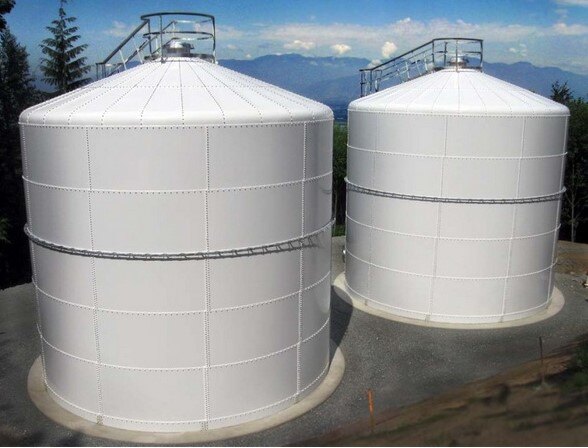
- Simple and robust structure: Fixed roof storage tanks have no complex internal moving parts, and the overall structure is relatively simple. They mainly consist of a cylindrical storage tank body, fixed roof, breather valve, gauging port, manhole, and other accessories. This simple design gives it high structural strength and long-term stability.
- Low construction cost: Compared with floating roof storage tanks, fixed roof storage tanks have simpler manufacturing processes, lower material consumption, and shorter installation and commissioning periods. For projects with limited budgets or small and medium-sized enterprises, fixed roof storage tanks are a highly cost-effective choice.
- Lower maintenance requirements: Since there are no moving components such as floating decks or sealing systems, daily maintenance of fixed roof storage tanks mainly focuses on roof weld inspection, corrosion detection, and ventilation system maintenance. The maintenance cycle is relatively long, and workload and difficulty are low.
- Wide range of applications: Fixed roof storage tanks can be used to store various media, including water, heavy oil, asphalt, diesel, and some low-volatility chemical products. They can also be used for dry bulk storage and have strong versatility.
- Presence of vapor space: This is the most fundamental feature and also the greatest limitation of fixed roof storage tanks. The gas space between the liquid surface and the storage tank roof expands and contracts with temperature changes and liquid level fluctuations, causing continuous evaporation losses of volatile media.
- Large evaporation losses: When storing volatile liquids, both “large breathing losses” (during loading and unloading operations) and “small breathing losses” (due to temperature changes) are significant. This not only causes economic losses but also generates volatile organic compound (VOCs) emissions.
- Relatively higher safety risks: The vapor space can easily accumulate flammable gas-air mixtures, posing fire and explosion risks when exposed to open flames or static electricity. In addition, drastic temperature changes may lead to overpressure or negative pressure inside the storage tank, affecting safe operation.
- Product quality may be affected: Oxygen in the vapor space may dissolve into the liquid, and condensed water may also accumulate, leading to oxidation, deterioration, or contamination of the stored medium, thereby affecting product quality.
A floating roof storage tank is a storage tank specifically designed to solve the vapor space problem of fixed roof storage tanks. Its core innovation is that the roof floats directly on the liquid surface and rises and falls synchronously with the liquid level, thereby minimizing or eliminating the gas space above the liquid surface.
According to different structural forms, floating roof storage tanks are mainly divided into two categories:
- External Floating Roof Storage Tanks: The top is completely open, and the floating roof is directly exposed to the atmospheric environment. The floating roof is made of welded steel plates and maintains sliding contact with the storage tank wall through an edge sealing system. This structure is simple and direct, with extremely low evaporation losses, and is currently the mainstream choice for large crude oil storage tanks.
- Internal Floating Roof Storage Tanks: A floating roof structure is installed inside a fixed roof storage tank, combining the sealing advantages of a floating roof storage tank with the environmental protection capability of a fixed roof storage tank. The fixed roof mainly provides rain, wind, and dust protection, while the internal floating roof eliminates vapor space. This structure is particularly suitable for high-purity chemicals, aviation fuels, and other media with strict quality requirements.
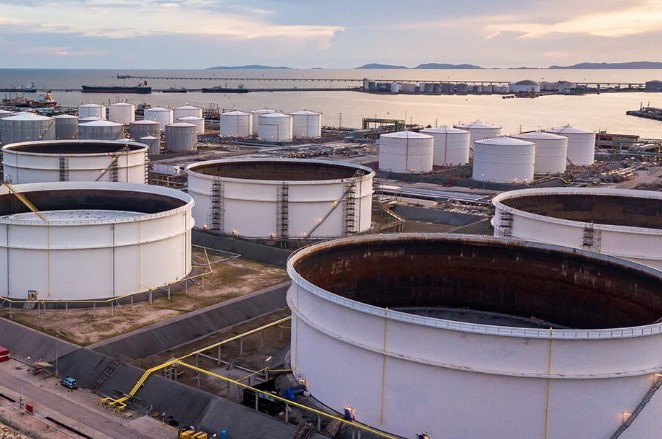
- Significant reduction in evaporation losses: By eliminating vapor space, floating roof storage tanks can reduce volatile organic compound emissions by more than 90%. For gasoline, crude oil, and other high-value and highly volatile media, this reduction directly translates into substantial economic benefits.
- Compliance with strict environmental regulations: With increasingly strict environmental regulations, VOC emissions from storage tanks are strictly controlled. Floating roof storage tanks have emissions mainly concentrated at edge seals and accessories, which are much lower than fixed roof storage tanks, making them easier to meet environmental standards.
- Improved storage safety: Eliminating vapor space significantly reduces the risk of flammable gas accumulation. This safety advantage is particularly obvious for flammable media storage scenarios.
- Maintains product quality: The liquid surface is directly covered by the floating roof, effectively isolating air and moisture and preventing oxidation and contamination. This is especially important for aviation fuels and high-purity chemical products.
- Suitable for large-capacity storage: Floating roof storage tanks are particularly suitable for large-scale storage, with single storage tank capacities reaching tens of thousands or even hundreds of thousands of cubic meters. They are widely used in refineries, large oil depots, and port storage bases.
- Higher initial investment: Floating roof storage tanks include multiple subsystems such as floating decks, sealing systems, guiding devices, and drainage systems. The structure is complex, design and manufacturing requirements are high, and construction costs are significantly higher than fixed roof storage tanks of the same capacity.
- More stringent maintenance requirements: Edge seals, floating deck operation conditions, and drainage system performance must be regularly inspected and maintained. Sealing materials are consumable parts that require periodic replacement. Compared with fixed roof storage tanks, maintenance workload and frequency are higher.
- Specific safety risks: Although vapor space explosion risks are eliminated, external floating roof storage tanks still face edge seal fire risks and require special attention during thunderstorms. Issues such as floating roof tilting, jamming, and drainage system failure must also be prevented.
After understanding the basic principles and core characteristics of fixed roof storage tanks and floating roof storage tanks, a key question arises: in practical applications, what are the specific differences between these two types of storage tanks? This section provides a systematic comparison from six dimensions: structural design, emission control, maintenance requirements, safety performance, product quality protection, and applicable scale, to help establish a clear selection framework.
Fixed roof storage tanks adopt a rigid roof permanently connected to the storage tank body, forming a static structure. Vapor control mainly relies on breather valves, pressure-vacuum valves, and external emission systems. The design is relatively standardized and engineering complexity is low.
Floating roof storage tanks have movable roof components and require buoyancy systems (pontoons or compartments), guiding systems, sealing systems, and drainage systems. The design must consider the stability of roof movement, sealing reliability, and extreme weather conditions, resulting in higher technical requirements.
Fixed roof storage tanks always have vapor space, resulting in continuous breathing losses due to temperature changes. Large breathing losses during loading and unloading operations are particularly significant. Vapor recovery systems or flare systems are usually required to handle emissions.
Floating roof storage tanks cover the liquid surface with a floating roof, effectively eliminating vapor space. Under normal operating conditions, emissions mainly come from minor leakage at edge seals and evaporation from accessories, and the emission level can be kept very low.
Fixed roof storage tanks have a simple structure with few moving parts. Maintenance mainly includes regular inspection of roof welds, anti-corrosion coatings, and breather valve functions. Maintenance cycles are long, and technical requirements for maintenance personnel are relatively low.
Floating roof storage tanks require attention to sealing system wear, roof leveling and smooth movement, and central drainage pipe sealing performance. Sealing components are consumable parts that require regular inspection and replacement. In cold regions, snow and ice accumulation on the floating roof must also be considered.
Fixed roof storage tanks easily form explosive vapor-air mixtures in the vapor space, requiring strict control of ignition sources and complete lightning and anti-static protection systems. The reliability of breather valves is directly related to internal pressure safety.
Floating roof storage tanks eliminate the main hazard source of vapor space, providing higher intrinsic safety. However, attention must be paid to floating roof seal fire risks, especially for external floating roof storage tanks during thunderstorms. Internal floating roof storage tanks have an advantage in this regard due to the protection of the fixed roof.
The vapor space in fixed roof storage tanks allows oxygen ingress and moisture condensation, which may lead to oxidation and deterioration during long-term storage. For products requiring high purity, fixed roof storage tanks are not the best choice.
Floating roof storage tanks keep the liquid surface covered at all times, isolating air and moisture and effectively preventing oxidation and contamination. Internal floating roof storage tanks perform particularly well in this regard, and the fixed roof also prevents dust and foreign matter from entering.
Selecting between fixed roof storage tanks and floating roof storage tanks requires comprehensive consideration of the following key factors:
Low-volatility media (such as heavy oil, asphalt, diesel, water, and some chemical intermediates): fixed roof storage tanks can fully meet storage requirements and are more economical.
High-volatility media (such as crude oil, gasoline, naphtha, light hydrocarbons): floating roof storage tanks are strongly recommended, as they can significantly reduce evaporation losses and safety risks.
High-purity requirement media (such as aviation fuel and fine chemicals): internal floating roof storage tanks are preferred, as they control volatility while ensuring product quality.
If the project location has strict environmental regulations, limited VOC emission targets, or corporate green and low-carbon goals, floating roof storage tanks are a more compliant and sustainable choice.
In cases with relatively relaxed emission requirements or projects equipped with complete vapor recovery systems, fixed roof storage tanks can still be used.
For storage of flammable media, especially in large storage facilities and refineries, floating roof storage tanks offer significant safety advantages. They are also recommended near installations with high fire and explosion risk sensitivity.
Fixed roof storage tanks are more suitable for environments with controllable safety risks, sufficient fire spacing, and well-managed operations.
Fixed roof storage tanks have lower initial investment but higher evaporation losses, which may lead to higher long-term operating costs. Floating roof storage tanks require higher initial investment but have lower evaporation losses, and for high-value media, the payback period may be short.
It is recommended to conduct a life-cycle cost analysis considering construction investment, maintenance costs, product losses, environmental costs, and other factors to select the most economical solution.
Small and medium storage tanks (generally below 5,000 m³) are more economical and flexible with fixed roof storage tanks. Large storage tanks (especially above 10,000 m³) benefit more from floating roof storage tanks in terms of scale efficiency.
Regarding site conditions, external floating roof storage tanks are sensitive to wind and snow loads and require special design in extreme climates. Internal floating roof storage tanks have stronger adaptability.
Fixed roof storage tanks and floating roof storage tanks each have their own applicable scenarios, and there is no absolute superiority or inferiority. The correct choice depends on specific process requirements, medium characteristics, environmental requirements, safety standards, and investment budget.
Choose fixed roof storage tanks when:
- Storing low-volatility liquids (water, heavy oil, asphalt, etc.)
- Emission control requirements are not strict
- Budget is limited and minimum initial investment is required
- Small to medium storage scale
- Maintenance resources are limited
Choose floating roof storage tanks when:
- Storing high-volatility liquids (crude oil, gasoline, naphtha, etc.)
- Strict environmental requirements and VOC control are needed
- Flammable media are stored with high safety requirements
- High product purity must be maintained
- Large-scale storage facilities with long-term economic optimization
In actual engineering projects, it is recommended to fully communicate with professional storage tank design institutions and equipment suppliers and conduct detailed technical and economic comparisons. If necessary, third-party safety and environmental assessments may be introduced to ensure scientifically sound decision-making.
Regardless of which type of storage tank is selected, standardized design, high-quality manufacturing, correct installation, and regular maintenance are all key to ensuring long-term safe operation. Only by combining equipment quality with management systems can storage tank facilities truly realize their investment value and ensure safe production and sustainable development of enterprises.
