1-12 of 347 results
Shell-and-Tube vs. Air-Cooled Heat Exchangers: Selection Guide

Shell-and-Tube vs. Air-Cooled Heat Exchangers: Selection Guide

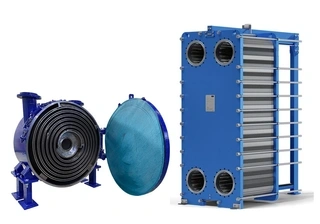
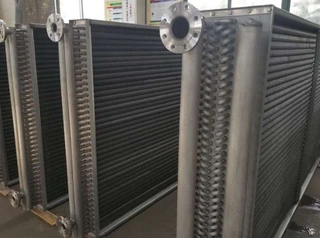
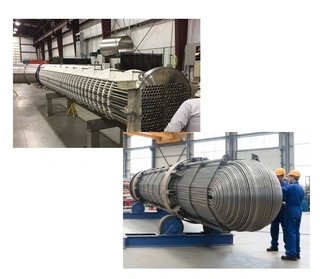
In industrial production, heat exchangers are core equipment for achieving heat transfer and management. Facing a wide variety of products on the market, shell-and-tube heat exchangers and air-cooled heat exchangers are the two most common and widely applied technical solutions. This article will help you comprehensively understand these two types of heat exchangers from multiple dimensions, including working principles, structural features, application scenarios, and selection considerations, and...

Carbon Steel Storage Tank vs. Stainless Steel Storage Tank

Carbon Steel Storage Tank vs. Stainless Steel Storage Tank

In industrial production, storage tanks are core equipment for storing liquids, gases, and solid materials. The choice of material directly determines how long the equipment can be used, how high the maintenance cost is, and how safe it is. Carbon steel and stainless steel are currently the two most common materials for storage tanks, but many people are not clear about their differences, and even have some misunderstandings, for example, thinking that stainless steel is always better than carbon...

Abnormal Pressure in Multi-Media Filter: Causes & Solutions

Abnormal Pressure in Multi-Media Filter: Causes & Solutions

Multi-media filters are essential components in industrial water treatment systems. They are widely used in pre-treatment processes, circulating water filtration, and other applications where high water quality is required. These filters rely on layers of different media, typically anthracite, sand, and garnet, stacked in decreasing particle size to achieve optimal filtration performance. Despite their robust design, pressure abnormalities are among the most frequent operational issues. Pressure...

Selection Guide for Underground and Aboveground Storage Tanks

Selection Guide for Underground and Aboveground Storage Tanks

In petrochemical projects, urban fuel supply systems, and various industrial facilities, the location and type of storage tank are critical decisions. In recent years, more projects have tended to adopt underground storage tanks, primarily to save surface space, improve visual aesthetics, and reduce exposure to external risks. However, an underground storage tank is not simply a tank buried in the ground. It fundamentally changes the structure of risk rather than eliminating it. This article analyzes...

A Complete Guide to Storage Tank Hydrostatic Testing

A Complete Guide to Storage Tank Hydrostatic Testing

Hydrostatic testing of storage tanks, often referred to in the industry simply as a water test, is a mandatory and critical verification procedure conducted after tank fabrication and installation are completed. In simple terms, the process involves filling the tank with water and applying a specified pressure to verify its sealing performance, structural strength, and operational safety. The core objectives of hydrostatic testing can be understood at three levels. First is safety: filling the tank...

Material Selection & Maintenance of Carbon Steel Storage Tanks

Material Selection & Maintenance of Carbon Steel Storage Tanks

In production sites of chemical, petroleum, food, pharmaceutical, and other industries, carbon steel storage tanks are among the most common storage equipment. This metallic material, composed primarily of carbon and iron (with carbon content typically between 0.12% and 2.0%), has become the most cost-effective solution in the industrial storage tank field due to its mature manufacturing process, stable material supply, and relatively low cost. The core advantages of carbon steel storage tanks are...

Spherical Storage Tanks: Design, Structure & Installation

Spherical Storage Tanks: Design, Structure & Installation

Spherical Storage Tanks (commonly referred to as sphere tanks) are steel pressure vessels with a perfectly spherical shape, often compared to a giant soccer ball or watermelon. This design is widely used in petroleum refining, petrochemical processing, and liquefied product terminal storage, primarily for storing liquid or gaseous materials. Most sphere tanks feature a single-shell structure; however, when storing liquefied gases under low-temperature and low-pressure conditions, a double-shell...

Storage Tank Insulation: Design, Materials & Maintenance

Storage Tank Insulation: Design, Materials & Maintenance

In many engineering projects, storage tank insulation is often simplified as wrapping with insulation and covering it with metal sheets. This one-sided understanding obscures the complex and critical nature of insulation systems. Insulation systems are by no means merely a matter of stacking material thickness; their success depends more on the rationality of the structure, waterproof performance, and subsequent maintenance management. Poor insulation can have consequences far more severe than a...

Air–Water Backwashing of Multimedia Filters

Air–Water Backwashing of Multimedia Filters

In the field of water treatment, multimedia filters are widely used, and their filtration performance directly determines water quality. Air–water backwashing technology is a core process that ensures the long-term, efficient operation of multimedia filters. This article provides an in-depth discussion of the principles, advantages, operating procedures, and precautions of air–water backwashing for multimedia filters, helping readers gain a comprehensive understanding of this highly...

What is Cement Silo: Structure, Functions & Maintenance

What is Cement Silo: Structure, Functions & Maintenance

In the construction industry, the cement silo is an indispensable piece of equipment. It is primarily used for storing bulk cement, ensuring the quality and safety of cement during transportation, storage, and use. As modern construction projects continue to scale up and demand higher efficiency, the role of cement silos has become increasingly important. This article provides a comprehensive and detailed discussion of cement silos, covering their structural composition, functional characteristics,...

Guide to Non-Destructive Testing of Storage Tanks

Guide to Non-Destructive Testing of Storage Tanks

In the petroleum industry, storage tanks are essential facilities for storing oil products and are a core component of oil depot storage and transportation systems. During long-term service, these tanks may develop defects such as cracks and corrosion, posing potential safety hazards that can lead to accidents, equipment damage, and even casualties. Therefore, non-destructive testing of in-service storage tanks is critically important, much like conducting a comprehensive health check, to ensure...

Guide to Safe Operation of Crude Oil Storage Tanks

Guide to Safe Operation of Crude Oil Storage Tanks

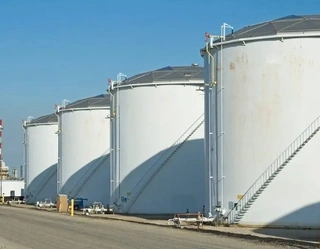
In the petrochemical industry, crude oil storage tanks, as an important part of infrastructure, bear the core responsibility of storing large volumes of crude oil. Due to the high flammability of crude oil itself and the complexity of the tank operating environment, its safe operation faces numerous challenges. Once a tank leak, fire, or corrosion accident occurs, it may not only cause huge economic losses but also pose serious threats to personnel safety and the surrounding environment. Therefore,...

Total 347 Records, 12 records per page