
In industrial production, storage tanks are core equipment for storing liquids, gases, and solid materials. The choice of material directly determines how long the equipment can be used, how high the maintenance cost is, and how safe it is. Carbon steel and stainless steel are currently the two most common materials for storage tanks, but many people are not clear about their differences, and even have some misunderstandings, for example, thinking that stainless steel is always better than carbon steel, or that carbon steel is not durable. In fact, the two materials each have their own characteristics, and the key is to choose the right scenario.
This article will objectively compare the differences between carbon steel storage tanks and stainless steel storage tanks from the dimensions of material properties, corrosion resistance, service life, cost analysis, installation and maintenance, and applicable industries, helping you make a reasonable choice based on actual needs.
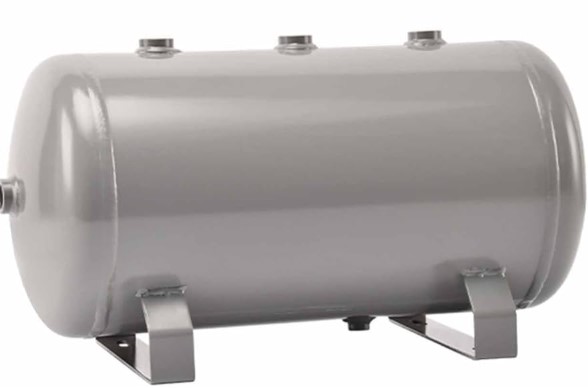
Material composition of carbon steel storage tanks: The main materials of carbon steel storage tanks are usually Q235B or Q345R. Both are iron-carbon alloys, mainly composed of iron and carbon, with Q345R having higher strength. Carbon steel is characterized by high strength, good toughness, mature welding performance, a very complete supply chain, and relatively low price. Because its surface does not have self-protection ability, carbon steel reacts with oxygen and moisture in humid environments to form rust. This rust layer has a loose structure and cannot prevent the internal metal from continuing to corrode. In industrial pollution areas or coastal high-salt environments, the annual corrosion rate of carbon steel is usually between 0.1 and 0.2 mm. If the stored medium contains acidic components or chloride ions, the corrosion rate will be even faster.
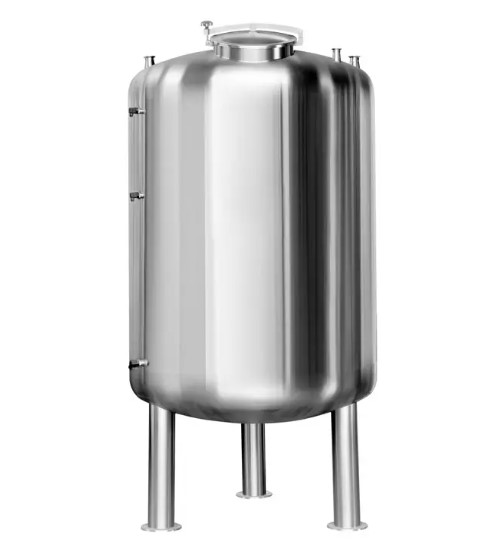
Material characteristics of stainless steel storage tanks: Stainless steel storage tanks commonly use grades 304 or 316L. The key feature is that the chromium content is not less than 10.5%. Chromium forms a dense chromium oxide passive film on the material surface, which can isolate corrosive media. Even if the surface is scratched, the passive film can self-repair in the air. This is the core mechanism of stainless steel corrosion resistance. 304 stainless steel is suitable for general corrosive environments, while 316L, due to the addition of molybdenum, has stronger resistance to pitting corrosion and chloride ion corrosion. Under certain conditions, such as environments with high chloride ion concentration, the presence of tensile stress, and relatively high temperature, pitting corrosion or stress corrosion cracking may also occur.
Different materials naturally have different corrosion resistance. Carbon steel and stainless steel have fundamental differences in corrosion mechanisms and protection methods. Understanding these differences is the key to correct selection.
The corrosion problems of carbon steel storage tanks are mainly concentrated in several aspects:
First is electrochemical corrosion. When the medium contains water and electrolytes, countless micro-galvanic cells are formed on the surface of carbon steel, and iron dissolves as the anode. This type of corrosion is more concentrated in welds and heat-affected zones.
Second is chemical corrosion. When storing acidic media or substances containing hydrogen sulfide and carbon dioxide, direct chemical reactions will occur.
Third is crevice corrosion and deposit corrosion. Liquid and deposits are likely to accumulate at the bottom of the tank and in weld depressions, forming local corrosion cells.
To address these issues, carbon steel storage tanks usually adopt a coating protection system: the primer uses epoxy zinc-rich or epoxy iron red, the intermediate coat uses epoxy micaceous iron oxide, and the topcoat uses acrylic polyurethane or fluorocarbon paint. At the same time, the design should consider drainage structures to avoid liquid accumulation.
The corrosion resistance of stainless steel is conditional. In the following environments, stainless steel may also fail:
Saltwater or seawater environments with chloride ion concentration exceeding 200 ppm may cause pitting corrosion
Environments with temperatures above 60°C and containing chlorides increase the risk of stress corrosion
When there are crevices or surface deposits, crevice corrosion is likely to occur
Direct contact with carbon steel may form galvanic corrosion
Therefore, when selecting stainless steel, it is necessary to clearly define parameters such as medium composition, chloride ion content, temperature range, and cleaning methods. The selection of welding materials is also critical. Matching stainless steel welding wire must be used, followed by pickling and passivation treatment to restore the surface passive film.
The choice of material not only affects the initial investment but also determines how long the equipment can be used and how much maintenance will cost. From the perspective of the full lifecycle, conclusions are often different from intuition.
The design service life of carbon steel storage tanks is usually 10 to 15 years. However, the actual life largely depends on the level of maintenance. If the anti-corrosion coating is recoated every 3 to 5 years and thickness is regularly measured, it is possible to use for 20 years. On the contrary, if the coating fails and is not repaired in time, perforation leakage may occur in 5 to 8 years.
The design service life of stainless steel storage tanks is generally 20 to 30 years, and under good conditions, it can be used for 40 to 50 years. Because the surface does not rust, it does not require frequent anti-corrosion maintenance like carbon steel and is basically in a maintenance-free state.
In terms of initial purchase cost, stainless steel storage tanks of the same specification are 30% to 50% more expensive than carbon steel. Taking a 100 cubic meter storage tank as an example, carbon steel equipment may cost 80,000 to 120,000 RMB, while stainless steel equipment ranges from 150,000 to 200,000 RMB.
However, the difference in operating costs is significant. The annual maintenance cost of carbon steel storage tanks is about 2% to 5% of the equipment value, including coating repair, rust removal, thickness testing, etc. The cumulative maintenance cost over 15 years may approach or even exceed the initial purchase cost. Stainless steel storage tanks have extremely low maintenance costs, mainly periodic cleaning and inspection, without coating repair expenses.
In terms of scrap residual value, stainless steel materials are 100% recyclable and have a high recycling price. Carbon steel has low recycling value, and severely corroded tanks may even require payment for dismantling and disposal.
After comprehensive calculation over a 20-year cycle, the stainless steel solution is often more economical and avoids losses and safety risks caused by corrosion-related shutdown maintenance.
Ultimately, material selection depends on what is being stored and where it is used. Different industries have very different requirements for storage tanks.
Carbon steel storage tanks are suitable for storing media with low corrosiveness:
- Water and water treatment: raw water, circulating water, fire water, reclaimed water storage. Water corrodes carbon steel slowly, and with conventional anti-corrosion measures, it can be used stably for a long time.
- Oil storage: diesel, gasoline, crude oil, lubricating oil, and other petroleum products. These oils are not highly corrosive to carbon steel and are commonly used in oil depots and gas stations.
- Dry bulk materials: grain, cement, plastic pellets, mineral powder, and other solid materials. Carbon steel has high strength, good wear resistance, and obvious cost advantages.
- Some chemical media: liquid alkali, concentrated sulfuric acid (specific concentrations), ammonia water, etc. The corrosion to carbon steel is controllable, or a protective film can form on the surface.
Stainless steel storage tanks are used in situations with high cleanliness or corrosion resistance requirements:
- Food and pharmaceuticals: milk, juice, liquor, water for injection storage. 304 or 316L materials meet GMP and FDA requirements, have smooth surfaces, are easy to clean, and do not contaminate products.
- Corrosive chemical media: dilute acids, organic solvents, chloride-containing chemical raw materials. 316L can resist erosion by various chemical media, preventing product deterioration and environmental pollution.
- Marine and coastal areas: seawater desalination equipment, raw material storage in coastal factories. High salt spray environments severely damage carbon steel, making stainless steel a necessary choice.
- High-purity gases and electronic-grade chemicals: ultrapure water, electronic gases, requiring tank materials that do not release ions or shed particles.
When determining whether to use carbon steel or stainless steel, it is recommended to systematically evaluate the following factors:
- Medium analysis: main components, water content, chloride ion concentration, pH value, whether it contains corrosive components such as hydrogen sulfide or ammonia. This is the primary basis for selection.
- Process conditions: operating temperature, pressure fluctuation range, whether operation is intermittent. The higher the temperature, the faster the corrosion; intermittent operation requires consideration of corrosion protection during shutdown periods.
- Maintenance capability: whether the enterprise has regular inspection and anti-corrosion construction teams. If maintenance resources are limited, the low-maintenance advantage of stainless steel is more obvious.
- Regulations and standards: food and pharmaceutical industries must use stainless steel; some chemical projects require stainless steel to prevent leakage and pollution due to environmental regulations.
- Full lifecycle budget: not only the purchase cost but also maintenance, downtime losses, and scrap residual value over 20 years.
There is no absolute superiority or inferiority between carbon steel storage tanks and stainless steel storage tanks, only suitability.
Situations for choosing carbon steel: weakly corrosive media, limited budget, availability of professional maintenance teams, storage of ordinary water or oil products, short-term projects.
Situations for choosing stainless steel: media containing chloride ions or acidic components, food and pharmaceutical requirements, high salt spray environments, long-term operation, limited maintenance resources, low tolerance for leakage risks.
