
In the construction industry, the cement silo is an indispensable piece of equipment. It is primarily used for storing bulk cement, ensuring the quality and safety of cement during transportation, storage, and use. As modern construction projects continue to scale up and demand higher efficiency, the role of cement silos has become increasingly important. This article provides a comprehensive and detailed discussion of cement silos, covering their structural composition, functional characteristics, operating procedures, and maintenance requirements. Through this systematic introduction, readers can gain a thorough understanding of this critical piece of equipment and apply best practices in actual use.
A cement silo is typically composed of several key components, including the silo body, silo roof, support structure, arch-breaking device, discharge outlet, internal and external inspection ladders, dust collector, pressure relief valve, manhole, high and low level indicators, discharge valve, and related auxiliary devices. These components work together to form a complete cement storage system, ensuring smooth storage, handling, and conveying of cement.
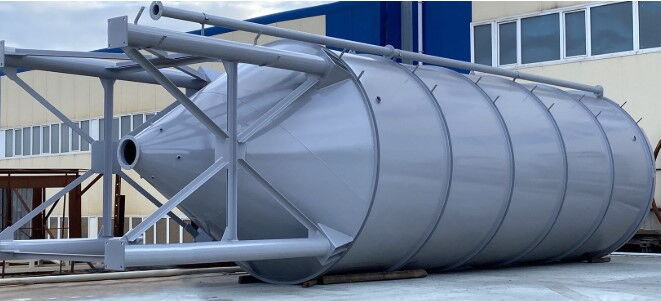
The silo body is the core component of a cement silo and is primarily used for storing bulk cement. Its design must take into account both strength and stability to prevent accidents such as silo rupture or support failure. The silo body is generally manufactured from high-strength steel materials, offering excellent load-bearing capacity, corrosion resistance, and sealing performance. Proper structural design ensures that the silo can withstand not only the static load of cement but also dynamic loads caused by filling, discharging, and environmental factors such as wind and seismic forces.
The silo roof is the top structure of the cement silo and typically houses essential equipment such as the dust collector, pressure relief valve, and manhole.
- Dust Collector: The dust collector is designed to capture suspended cement particles inside the silo, reducing dust emissions during filling and discharging operations and minimizing environmental pollution.
- Pressure Relief Valve: This device regulates internal pressure, preventing excessive pressure buildup that could lead to dangerous silo rupture or deformation.
- Manhole: The manhole provides access for personnel to enter the silo for inspection, cleaning, and maintenance tasks, ensuring operational safety and convenience.
The support structure is responsible for bearing the weight of the silo body and the stored cement. It usually consists of four cylindrical steel pipe legs welded together to form a stable framework. The design of the support structure must undergo strict strength calculations to ensure it can safely withstand the combined weight of the silo and its contents. Proper welding quality and structural integrity are critical to preventing support failure.
The arch-breaking device is one of the most critical design elements of a cement silo. Its main function is to prevent cement from forming arches, clumps, or blockages inside the silo. Cement, being a fine powder material, is prone to bridging and compaction, especially under high humidity or long storage periods. The arch-breaking device ensures smooth material flow during discharge, effectively reducing downtime caused by clogging.
The discharge outlet is the point at which cement exits the silo. Its height and position must be carefully calculated based on factors such as the location and height of the concrete mixer, the center distance between the silo and the mixer, and the length and inclination angle of the screw conveyor. A well-designed discharge outlet directly affects discharge efficiency and operational smoothness.
Internal and external inspection ladders provide safe access routes for operators and maintenance personnel to move up and down the silo. These ladders facilitate inspection, cleaning, and repair of both the interior and exterior of the silo. Their design must prioritize safety, stability, and ease of use to prevent accidents during operation.
The functions of a cement silo can be summarized into several key aspects:
- Storage Function: The primary function of a cement silo is to store bulk cement. Its enclosed structure effectively prevents cement from being exposed to moisture, contamination, or external pollutants, thereby maintaining cement quality. In addition, silos are typically equipped with material level monitoring systems that provide real-time information on the quantity and position of stored cement, enabling operators to manage inventory efficiently.
- Discharge Function: The discharge function of a cement silo is achieved through the coordinated operation of the discharge outlet and unloading equipment. The design of the outlet ensures smooth and continuous discharge without blockages. The arch-breaking device installed at the lower section of the silo further prevents powder compaction, allowing cement to flow evenly and steadily.
- Environmental Protection Function: Modern cement silos are equipped with electric dust collection systems at the top. These systems effectively capture airborne cement particles generated during filling operations, significantly reducing dust emissions and protecting the surrounding environment. This feature is especially important for maintaining clean and compliant construction sites.
- Safety Function: Safety is a key consideration in cement silo design. Devices such as pressure relief valves and high and low level indicators play crucial roles in ensuring safe operation. The pressure relief valve prevents excessive internal pressure, while level indicators monitor cement height in real time, helping to prevent overfilling or material shortages.
Strict adherence to proper operating procedures is essential to ensure safe and efficient silo operation.
Before unloading cement, operators must check that the discharge butterfly valve, external air source connection, exhaust valve, and both inlet ports are closed and securely tightened to prevent air leakage. The cement silo controller should then be activated, and the reducer shifted to neutral. The clutch pedal should be depressed to fully disengage the reducer from the motor.
Next, the reducer switch is turned on, followed by gradually opening the motor switch to allow the motor to start slowly. The motor current should be adjusted carefully, and the motor speed stabilized at approximately 900 r/min.
Once the system is stable, the discharge butterfly valve can be opened to begin unloading. During discharge, the motor current must remain stable; otherwise, uneven discharge may occur. When material release is required, the manual discharge valve at the bottom of the cone is opened first, and cement is conveyed through the screw conveyor.
If arching or bridging occurs during discharge, the operator should promptly activate the solenoid valve of the arch-breaking device to inject air and eliminate the blockage. This ensures continuous and smooth cement supply.
After unloading is complete, the motor should be shut down. Once the motor has completely stopped, the discharge butterfly valve can be closed. During the entire discharge process, operators must continuously activate the vibration motor of the dust collector to shake off cement adhering to the filter bags. This prevents bag blockage and reduces the risk of silo overpressure or rupture.
Regular maintenance is essential for ensuring the long-term, stable operation of cement silos.
- Sealing Inspection: The sealing performance of the silo should be inspected regularly, particularly at critical points such as the manhole and discharge outlet. Any gaps should be promptly sealed with appropriate sealing materials to prevent rainwater infiltration, which could cause cement to become damp and deteriorate.
- Cleaning the Silo: Both the interior and exterior of the cement silo should be cleaned on a regular basis. Special attention should be given to the arch-breaking device and dust collector filter bags. During cleaning, ensure that the inner walls of the silo are completely dry to prevent cement caking or blockages caused by moisture.
- Equipment Inspection: Key components such as the dust collector, pressure relief valve, and material level indicators should be inspected periodically to ensure proper functioning. Any malfunctioning equipment should be repaired or replaced in a timely manner to avoid operational disruptions.
- Support Structure Maintenance: The strength and stability of the support structure must be checked regularly, particularly at welded joints. If cracks, deformation, or other structural issues are detected, immediate repair or reinforcement is required to ensure that the structure can safely support the silo and its contents.
During operation, cement silos may encounter several common issues, such as discharge blockage or silo corrosion. Below are typical problems and corresponding solutions:
- Discharge Blockage: If the silo outlet becomes blocked, operators should not strike the silo blindly. Instead, the root cause should be identified first. If blockage is caused by cement caking, activating the arch-breaking device can help loosen the material and restore flow. In severe cases, compressed air may be used for cleaning, but safety precautions must be strictly followed.
- Silo Corrosion: Over long-term use, silo bodies may suffer from corrosion, potentially allowing rainwater to enter. To address this, the sealing condition of the silo should be checked regularly, and corroded areas repaired promptly. Applying anti-corrosion coatings or paints can further enhance durability.
- Equipment Failure: If the cement conveying system, such as the screw conveyor, fails, the manual discharge valve at the bottom of the cone should be closed immediately to prevent cement spillage and waste. The cause of the failure should then be investigated, and necessary repairs or replacements carried out.
Cement silos are widely used in concrete batching plants, construction sites, and bulk material storage facilities. In concrete batching plants, silos store bulk cement to ensure a stable and reliable supply. On construction sites, they enable convenient cement delivery to various work areas, improving efficiency. In addition, cement silos can also be used to store other bulk materials such as grain and fly ash, demonstrating broad application potential.
When purchasing a cement silo, several factors should be carefully considered:
Quality and Performance: Selecting a silo with reliable quality and excellent performance is critical for long-term operation. Buyers should evaluate strength, sealing performance, corrosion resistance, and compliance with national standards.
Specifications and Dimensions: The capacity and dimensions of the silo should be selected based on actual requirements. Larger silos offer greater storage capacity but require more space. Therefore, site conditions and cement consumption must be considered to achieve optimal selection.
After-Sales Service: Reliable after-sales service is an important guarantee for smooth operation. Choosing a manufacturer with a comprehensive service network ensures timely maintenance and technical support when issues arise.
As a vital bulk material storage device, the cement silo plays an essential role in the construction industry and related fields. By understanding its structural composition, functional characteristics, operating procedures, and maintenance requirements, users can manage and utilize cement silos more effectively, ensuring long-term stability and safety. When selecting a cement silo, attention should be paid to quality, specifications, and after-sales service to ensure the chosen equipment meets actual needs.
We hope this article provides valuable reference information and helps you gain a deeper understanding of cement silos. If you have further questions or require additional details, please feel free to consult at any time.
