
In the petroleum industry, storage tanks are essential facilities for storing oil products and are a core component of oil depot storage and transportation systems. During long-term service, these tanks may develop defects such as cracks and corrosion, posing potential safety hazards that can lead to accidents, equipment damage, and even casualties. Therefore, non-destructive testing of in-service storage tanks is critically important, much like conducting a comprehensive health check, to ensure their safe and reliable operation.
The condition of a storage tank is directly related to the safety and stability of petroleum storage. Many in-service tanks develop defects such as cracks and corrosion to varying degrees due to prolonged operation. These defects may result from limitations of the materials themselves, manufacturing process issues, or inadequate management during operation. For example, some tanks do not receive timely and effective maintenance and inspection, allowing corrosion to intensify gradually and ultimately threaten the structural integrity of the tank.
According to statistical data, among all known storage tank accidents, more than 20% are caused by leakage resulting from corrosion of the tank bottom plates, making it the leading cause of storage tank failures. Therefore, strengthening corrosion detection of tank bottom plates is a key measure to improve overall storage tank safety.
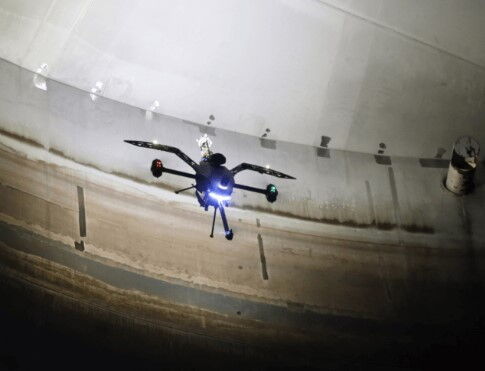
After understanding the importance and necessity of storage tank NDT, it is essential to examine the specific testing methods in detail. These methods represent critical technical means to ensure the safe operation of storage tanks, ranging from traditional inspection techniques to advanced high-tech solutions. Each method has its own advantages and applicable scenarios. Through scientific and reasonable selection and combination, the overall condition of storage tanks can be comprehensively and efficiently evaluated, potential safety hazards can be identified in a timely manner, and solid assurance can be provided for safe operation.
Tank bottom welds are critical structural components, and their quality directly affects the sealing performance and safety of the tank. Common inspection methods include:
- Vacuum Box Testing: All bottom plate weld seams should undergo tightness testing using the vacuum box method. The test negative pressure should be no less than 53 kPa, and no leakage is considered acceptable. This method is simple and effective in detecting weld leakage, ensuring tank tightness.
- Penetrant Testing (PT) and Magnetic Particle Testing (MT): For butt welds of annular plates with a specified yield strength greater than 390 MPa, penetrant testing should be conducted after completion of the root pass, and penetrant or magnetic particle testing should be repeated after the final welding layer. These methods effectively detect surface and near-surface defects such as cracks and porosity, ensuring weld quality.
- Radiographic Testing (RT): For annular bottom plates with a thickness ≥ 10 mm, radiographic testing should be performed within 300 mm from the outer end of each butt weld. For plates with a thickness < 10 mm, at least one weld made by each welder should be randomly inspected using the same method. Radiographic testing can penetrate the weld to detect internal defects such as lack of fusion and slag inclusions, making it a highly effective inspection technique.
Longitudinal and circumferential welds are vital components of the tank shell, and their inspection is equally important:
- Longitudinal Weld Inspection: For each welder and each plate thickness (plate thickness differences ≤ 1 mm may be regarded as the same), a 300 mm section from any position of the first 3 m of weld length should undergo radiographic testing. Subsequently, regardless of the number of welders, a 300 mm section should be selected from any position within every 30 m of weld length (including remainders). At least 25% of inspected sections should be located at T-joints, with no fewer than two such locations per tank. This approach ensures the quality of longitudinal welds and timely detection of defects.
- Circumferential Weld Inspection: For each plate thickness (based on the thinner plate), a 300 mm section from any position of the first 3 m of weld length should be radiographically tested. Subsequently, for each plate thickness, a 300 mm section should be selected from any position within every 60 m of weld length (including remainders). This ensures the integrity of circumferential welds and helps prevent leakage caused by weld defects.
The T-joint between the bottom course shell and the tank bottom is another critical structural area. The inspection requirements are as follows:
When the thickness of the annular bottom plate is ≥ 8 mm and the thickness of the bottom course shell plate is ≥ 16 mm, or when steel plates of any thickness have a yield strength greater than 390 MPa, penetrant or magnetic particle testing should be conducted on the internal fillet weld after completion of welding for both internal and external fillet welds. After the hydrostatic test, the same inspection should be repeated, with acceptance criteria identical to those for bottom plate inspection. For steel plates with yield strength > 390 MPa, penetrant testing should also be performed after completion of the first welding layer of the internal fillet weld. This ensures the integrity of T-joints and prevents leakage caused by welding defects.
After discussing various NDT methods, it is important to understand the types of storage tank inspections, which are mainly divided into out-of-service inspection and online inspection. Each type has its own characteristics and is suitable for different scenarios and operational requirements.
Out-of-service inspection is a traditional approach that requires shutdown, tank cleaning, and safe entry of inspection personnel into the tank. Conventional NDT methods such as radiographic testing and ultrasonic testing are typically used. While this method allows for comprehensive and detailed inspection, it has disadvantages such as long inspection periods, high costs, and production impact. Therefore, determining a reasonable inspection interval is crucial. Excessively long intervals increase safety risks, while overly frequent inspections lead to unnecessary maintenance costs and production losses.
Online inspection is a modern inspection approach that enables safety evaluation of tank bottom plates without opening the tank or stopping production. Common online inspection methods include:
- Acoustic Emission (AE) Testing: AE testing is a dynamic inspection method that uses sensor arrays installed on the lower external wall of the tank to receive acoustic emission signals generated by corrosion and leakage at the bottom plate. By analyzing these signals, the corrosion condition of the tank bottom can be evaluated. AE testing does not require shutdown, tank opening, product transfer, or cleaning. Only valves and pumps need to be shut down 12–24 hours before testing, and about 2 hours of effective data acquisition is required. After testing, the tank can resume operation. Currently, AE testing is the most widely used online inspection technology for tank bottom plates.
- Ultrasonic Guided Wave Testing: Ultrasonic guided wave testing utilizes the propagation characteristics of elastic waves within structures, mainly using Lamb waves. It features long propagation distances, rapid inspection, and detection accuracy unaffected by the tank contents, making it suitable for online inspection of tank bottom and shell plates. Probes installed on the exposed annular bottom plate excite Lamb waves and receive reflected waves from defects. Analysis of these reflections reveals corrosion conditions. At present, the application of this technology is still relatively limited.
- Robotic Inspection: Robotic inspection integrates modern control theory, explosion-proof isolation technology, visualization technology, ultrasonic testing, and magnetic flux leakage testing, representing an automated form of traditional NDT. Robots can be equipped with different inspection modules depending on the inspection scope, enabling detection of tank bottoms, internal walls, or other areas. For online tank bottom inspection, robots are inserted through the roof manhole and operated remotely from outside the tank. This technology is still under continuous development and improvement.
- Ensuring Safe Operation: NDT enables timely detection of cracks, corrosion, and other defects, allowing corrective maintenance before defects worsen and cause leakage or even explosions. This is vital for safeguarding oil storage, protecting personnel, and ensuring environmental safety.
- Reducing Operation and Maintenance Costs: Online inspection technologies allow inspections without shutdown, minimizing economic losses caused by downtime. Accurate evaluation of corrosion conditions also enables optimized maintenance planning, avoiding unnecessary repairs and reducing overall O&M costs.
- Improving Inspection Efficiency: Advances in NDT technologies have made inspections faster and more convenient. Techniques such as acoustic emission and ultrasonic guided wave testing can complete inspections in a short time while providing reliable results, significantly improving efficiency and shortening inspection cycles.
In summary, non-destructive testing of storage tanks is a core technical means for ensuring the safe and stable operation of petroleum storage and transportation systems. From bottom welds and shell welds to critical T-joints, and from traditional out-of-service inspections to efficient online and intelligent robotic inspections, these methods complement each other to form a multi-layered safety defense system. Through scientific selection of inspection techniques and rational determination of inspection intervals, potential hazards such as cracks and corrosion can be identified and eliminated in a timely manner, significantly reducing accident risks while minimizing production downtime and optimizing maintenance costs. With the continuous advancement and wider application of NDT technologies, storage tank safety management will become more precise and efficient, providing strong support for the sustainable development of the petroleum industry.
