
In production sites of chemical, petroleum, food, pharmaceutical, and other industries, carbon steel storage tanks are among the most common storage equipment. This metallic material, composed primarily of carbon and iron (with carbon content typically between 0.12% and 2.0%), has become the most cost-effective solution in the industrial storage tank field due to its mature manufacturing process, stable material supply, and relatively low cost.
The core advantages of carbon steel storage tanks are reflected in multiple dimensions. First, in terms of economy, for large-diameter heavy tanks, carbon steel shows significant advantages in material procurement, welding processing, manufacturing cost, and delivery cycle. Second, in terms of process maturity, after decades of engineering practice, the welding technology, inspection standards, and quality control system for carbon steel are already very well established. Third, in terms of applicability, for most non-highly corrosive media under moderate temperature and controlled moisture conditions, carbon steel tanks with reasonable corrosion protection measures can achieve long-term stable operation.
In practical applications, carbon steel storage tanks are widely used for storing hydrocarbon compounds, certain organic solvents, various fuels, lubricants, and industrial liquids that are not highly corrosive. In these scenarios, as long as corrosion allowances are clearly defined, water and impurity content are strictly controlled, and a comprehensive corrosion protection system is implemented, the service life of carbon steel tanks can reach 15 to 20 years or even longer.
In engineering, determining whether a carbon steel tank is suitable is never simply based on the name of the medium. What truly affects the corrosion rate of carbon steel is the combined influence of the medium’s composition, water content, temperature, impurities, oxygen content, and operating mode.
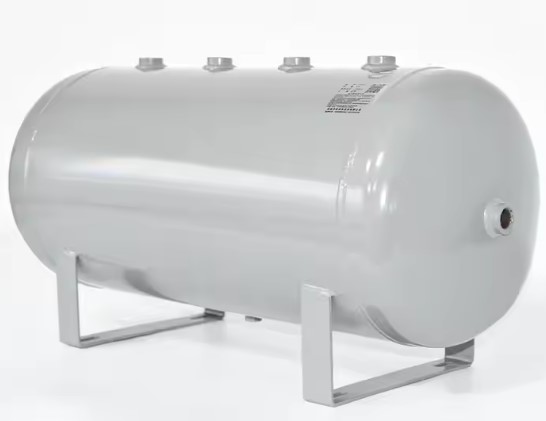
Carbon steel storage tanks are most suitable under the following operating conditions:
- Non-highly corrosive media: such as straight-run gasoline, diesel, kerosene, and other hydrocarbon products, as well as acetone, ethanol, and other partially polar solvents.
- Moderate temperature control: generally referring to normal or moderate temperature conditions between -20°C and 200°C.
- Controllable water content: medium water content below 0.1% and no free water.
- Low impurity content: no or only trace amounts of chloride ions, sulfides, or other corrosive components.
- Continuous and stable operation: avoiding frequent filling and emptying cycles.
Under these conditions, carbon steel tanks, combined with appropriate internal anti-corrosion coatings and reasonable corrosion allowance design (usually 1 to 3 mm), can achieve the best balance of economy and reliability.
The greatest threat to carbon steel is not whether the medium sounds dangerous, but electrochemical corrosion formed by the combination of water, electrolytes, temperature, and oxygen. The following conditions require particular caution:
- Chloride-containing systems: Chloride ions are strong promoters of carbon steel corrosion. Even trace amounts (exceeding 50 ppm) in the presence of water can cause pitting and stress corrosion cracking. Seawater, chlorinated chemical media, and chlorinated organic compounds are high-risk categories.
- Acidic environments: Media with pH lower than 5 can quickly dissolve the protective oxide film on carbon steel, leading to uniform or accelerated localized corrosion. Especially systems containing organic acids (e.g., acetic acid, formic acid) or inorganic acids (e.g., hydrochloric acid, sulfuric acid).
- Sulfur-containing environments: Compounds such as hydrogen sulfide (H₂S) and sulfur dioxide (SO₂) can form highly acidic conditions in the presence of water and may also induce sulfide stress corrosion cracking.
- Strong alkali and high-temperature environments: While carbon steel has some tolerance to weak alkali, under high-temperature conditions (over 80°C) with strong alkali (pH>12), it may experience caustic embrittlement, causing a sharp drop in material toughness.
- Temperature-sensitive media: Some media mildly corrode carbon steel at room temperature, but with every 10°C increase in temperature, the corrosion rate may double. Therefore, the process temperature range, especially the maximum working temperature, must be clarified.
The operating mode of tanks is often overlooked, but it actually has a decisive effect on corrosion rate:
- Intermittent operation and vapor space changes: Frequent filling and emptying cause repeated changes in the tank’s vapor space, allowing air (oxygen) to enter, forming a high-oxygen area at the liquid–vapor interface and accelerating interface corrosion. This corrosion typically manifests as localized thinning around the liquid level.
- Condensation accumulation during downtime: When the tank is idle, internal temperature drops, and water vapor condenses on the tank top and upper walls, forming droplets that slide down to the tank bottom. This condensed water often contains residual medium components and is highly corrosive, forming localized corrosion pits at the bottom.
- Potential risks of insulation layers: Insulated tanks require special attention to corrosion under insulation (CUI). If water enters or the insulation becomes damp, moisture trapped between the insulation and tank wall creates a hidden corrosive environment. This type of corrosion is often severe by the time it is discovered.
Professional tank engineering should not simply answer “can do” or “cannot do,” but should establish a systematic evaluation process.
During the project initiation phase, complete input information must be collected:
Detailed composition of the medium, including main components and impurities
Water content and its form (dissolved, free, emulsified)
Temperature range, including normal operating, maximum, and minimum temperatures
Pressure range and pressure fluctuation conditions
Oxygen content or air exposure
Operating mode: continuous, intermittent, seasonal use
Filling frequency and turnover
Maintenance cycle and expected service life
Based on the collected information, possible corrosion types are analyzed:
Uniform corrosion: overall surface thinning, compensated by corrosion allowance
Pitting: localized deep corrosion, difficult to predict and detect
Crevice corrosion: occurs in hidden areas under gaskets or deposits
Electrochemical corrosion: caused by contact of different metals or concentration differences on the same metal surface
Stress corrosion cracking: brittle cracking caused by tensile stress combined with corrosive environment
Corrosion fatigue: caused by combined action of cyclic load and corrosive environment
If the assessment deems carbon steel feasible, a complete protection system must be determined:
Corrosion allowance design: Add extra thickness to calculated wall thickness based on predicted corrosion rate and design life. Generally, 1–3 mm for industrial tanks, and 3–5 mm for strongly corrosive environments.
Internal anti-corrosion systems:
Coating lining: epoxy, phenolic, glass flake, suitable for mild corrosion
Rubber lining: natural rubber, butyl rubber, with good acid/alkali resistance
Plastic lining: polyethylene, polypropylene, PTFE, strong chemical resistance but limited temperature resistance
Metal lining: stainless steel composite plate, stainless steel overlay, high cost but good reliability
External protection measures:
Multi-layer coating: primer + intermediate + topcoat
Cathodic protection: sacrificial anode or impressed current, suitable for buried or submerged areas
Insulation waterproofing: ensure insulation sealing to prevent rainwater ingress
If carbon steel use is considered too risky, alternatives include:
Stainless steel (304, 316L, etc.) for moderately corrosive media
Duplex stainless steel or super stainless steel for strongly corrosive environments
Non-metallic materials such as fiberglass (FRP) for specific chemical media
Lined or composite plate solutions for a balance of economy and corrosion resistance
Even with proper design and material selection, carbon steel tanks will fail prematurely without maintenance. A systematic maintenance program ensures a service life of 20 years.
Appearance inspection: Regularly check for deformation, damage, corrosion, paint peeling, especially welds, connections, manholes, and other stress-concentrated areas. Record and mark new issues promptly.
Seal inspection: Check flanges, valves, and manholes for liquid or gas leakage, using visual liquid traces, odor, or portable gas detectors.
Safety device inspection: Confirm level gauges, pressure gauges, thermometers are accurate; safety valves and breathers operate freely; flame arresters are unobstructed.
Cleaning: Establish cleaning cycle based on stored medium. Generally, liquid tanks can be rinsed with water or neutral cleaners; viscous or scaling media may require high-pressure water jet (100–200 bar) or chemical cleaning (acid, alkali, or solvent). Gas testing (O₂ 19.5–23.5%, combustible gas <10% LEL, toxic gases within exposure limits) must be completed, and personnel equipped with protective gear.
Inspection of anti-corrosion layer: Check for coating damage, peeling, blisters, lining cracks, or delamination. Repair small areas with compatible coatings; large failures require complete recoating.
Cathodic protection maintenance: Sacrificial anodes must be checked periodically and replaced when remaining weight <20%; impressed current systems checked for voltage/current output and anode bed grounding resistance.
Pressure testing: Perform hydrostatic or pneumatic tests according to regulations (e.g., “Pressure Vessel Safety Technical Supervision Procedures”) every 3–6 years; test pressure 1.25× design pressure, maintain ≥30 min, check for leaks or deformation.
Environmental control: Maintain stable temperature and humidity around the tank; avoid thermal stress from sharp temperature differences. Keep surrounding area clear of debris, flammables, explosives, or corrosive substances, and ensure good ventilation.
Operation standards: Strictly control loading/unloading rates to prevent static electricity (hydrocarbon media <3 m/s). Avoid overtemperature, overpressure, or overfill. Minimize unnecessary filling/emptying cycles to reduce fatigue risk.
Idle protection: Tanks out of service for long periods should be nitrogen or dry air blanketed, excluding oxygen; or use VCI (volatile corrosion inhibitor). Comprehensive inspection required before reactivation.
Even with thorough corrosion assessment and proper maintenance, carbon steel tanks still encounter typical issues. If not addressed, local defects may develop into systemic risks. The following analyzes the three most common problems with practical solutions:
Rust is the most common failure mode. Mechanism: iron reacts with water and oxygen to form iron oxides. Rust reduces wall thickness and contaminates stored materials.
Prevention: Control water content, use desiccants or dryers if necessary, coat internal surfaces, maintain slight positive nitrogen pressure, drain condensation at tank bottom.
Treatment: Minor rust, mechanically remove and recoat; severe rust, assess remaining thickness, patch locally, or replace tank section.
The most hidden and dangerous corrosion for insulated tanks. Moisture enters the insulation, creating long-term damp conditions between insulation and tank wall; corrosion rate may exceed 10× atmospheric corrosion.
Prevention: Use waterproof insulation, seal outer layer with 0.5–0.8 mm aluminum or stainless steel, install drainage at insulation bottom, apply high-temperature anti-rust primer to exterior.
Detection: Remove sections for inspection or use infrared thermography, pulsed eddy current, or other NDT techniques.
Common in intermittently operated tanks, manifesting as localized corrosion around the liquid level.
Prevention: Maintain high liquid level, use floating roof or internal floating roof, extend internal coating to tank top, control dissolved oxygen in medium.
Material selection and maintenance of carbon steel storage tanks is a systematic engineering process. From medium analysis and corrosion assessment in the project initiation stage, to material selection, corrosion allowance determination, and anti-corrosion system design during design, quality control in manufacturing, and standardized operation and regular maintenance during service—every stage affects final tank life and safety.
For engineers, the professional answer is not “anything can be done,” but “what should be done under which conditions for safe operation.” Only by fully understanding medium characteristics, corrosion mechanisms, and protection measures can economic and reliable technical decisions be made. For enterprise managers, investing in tank maintenance and establishing a complete inspection and maintenance system is the most effective way to avoid unplanned shutdowns and safety accidents.
Carbon steel storage tanks themselves are mature and reliable technology. The key is to apply them to the correct scenarios, provide proper protection, and maintain them continuously. By following these principles, carbon steel tanks can safely operate in most industrial applications for more than 20 years, creating long-term value for enterprises.
